

Byrdcliffe Colony: The Arts and Crafts Utopia That Shaped American Culture |
Founded in 1902, this Woodstock arts colony remains the oldest operating arts and crafts community in America — and its influence on theater, music, and visual art is still felt today |
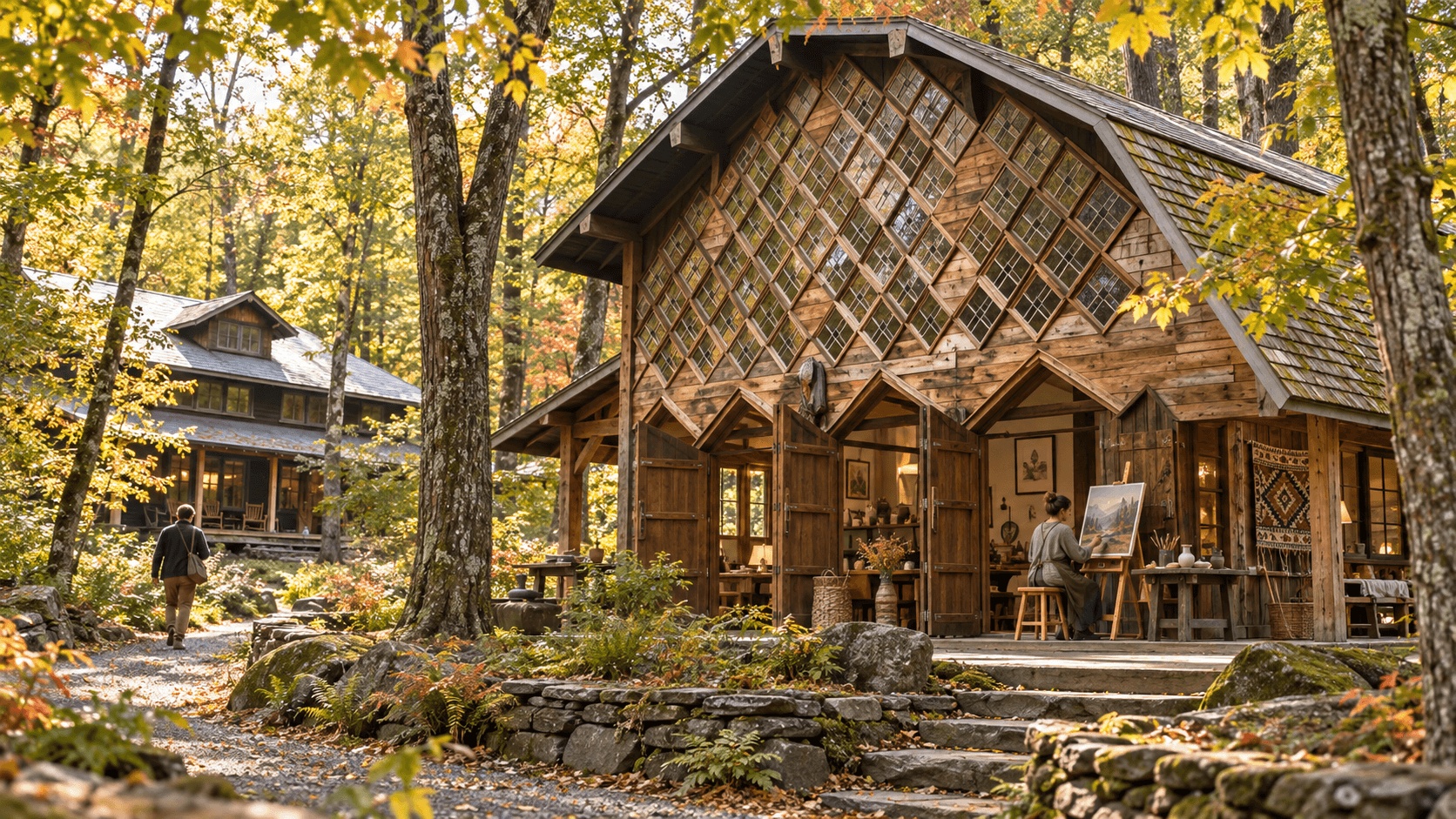
Nestled in the woods of Woodstock, New York, the Byrdcliffe Colony stands as a living monument to the American arts and crafts movement. Founded in 1902 by Jane Byrd McCall and Ralph Radcliffe Whitehead, with artist Bolton Brown and writer Hervey White, Byrdcliffe was conceived as a utopian community where artists could live and work free from the pressures of commercialism. The colony's name was drawn from McCall's maiden name ("Byrd") and Whitehead's estate in England ("Cliff").
More than 120 years later, Byrdcliffe remains the oldest operating arts and crafts colony in America — a distinction that speaks to the enduring power of its founding vision.
A Bold Experiment in Artistic Freedom
Ralph Radcliffe Whitehead, a wealthy British-born philosopher and social reformer, had long dreamed of creating a community where art and craft could flourish outside the industrial machine. He brought his vision to the Catskill foothills near Woodstock, purchasing roughly 300 acres of land and commissioning the construction of 35 original buildings — including studios, cottages, a dining hall, and workshops for furniture making, pottery, weaving, and metalwork.
The colony attracted artisans and creatives who believed that handmade objects carried a spiritual value that mass production could never replicate. Byrdcliffe craftspeople produced furniture, textiles, ceramics, and metalwork that are now prized in museum collections and private auctions across the country.
But Byrdcliffe's influence extended well beyond the decorative arts. The colony became a crucible for American theater, literature, and music — fields that would carry its spirit of experimentation into the 20th century and beyond.
The Maverick Connection: Music in the Woods
One of Byrdcliffe's most significant offshoots was the Maverick Colony, founded by Hervey White — one of Byrdcliffe's original co-founders — after he left the colony in the mid-1900s to pursue a more bohemian, unstructured artistic community nearby. White, a utopian writer and philosopher, established the Maverick Festival in 1915, a communal arts gathering that combined music, theater, and outdoor performance in a rustic woodland setting.
The Maverick Concert Hall, built by hand in 1916, became the permanent home of what is now Maverick Concerts — the oldest continuous summer chamber music festival in the United States. The hall itself is a masterpiece of rustic architecture: a barn-like structure with a gambrel roof, built by volunteers from local materials, nestled deep in the woods off Maverick Road in West Hurley.
It was in this hall, on August 29, 1952, that John Cage's legendary composition 4'33" received its premiere — a piece in which the performer plays nothing for four minutes and thirty-three seconds, letting the ambient sounds of the environment become the music. The premiere, performed by pianist David Tudor, forever linked the Maverick Concert Hall to one of the most consequential works of 20th-century avant-garde music.
Today, Maverick Concerts continues its summer tradition of world-class chamber music performances, drawing audiences from across the Hudson Valley and beyond to hear professional musicians perform in one of the most acoustically and atmospherically remarkable venues in the country.
A Legacy in Theater and Letters
Byrdcliffe's contribution to American theater is one of its most remarkable — and least widely known — legacies. The colony fostered a culture of experimental performance that helped lay the groundwork for the little theater movement that swept America in the early 20th century. Playwrights, actors, and directors associated with the broader Woodstock artistic community developed new approaches to staging, storytelling, and audience engagement that rejected the commercial formulas of Broadway in favor of artistic integrity and innovation.
The colony also attracted writers, poets, and intellectuals who shaped American letters. The Woodstock area, with Byrdcliffe at its creative center, became a destination for some of the most important literary and artistic figures of the era — people who came for the summer seasons and stayed for the community, the landscape, and the freedom to think and create on their own terms.
Byrdcliffe Today: The Woodstock Byrdcliffe Guild
The Woodstock Byrdcliffe Guild (WBG) now owns and operates the historic Byrdcliffe campus, preserving the colony's buildings, mission, and creative programs for the 21st century. The Guild maintains many of the original structures within the Byrdcliffe Historic District, which was added to the National Register of Historic Places on May 7, 1979.
The WBG offers exhibitions, workshops, concerts, and educational programs that continue the colony's founding commitment to the arts. Visitors can tour the historic campus, view rotating exhibitions of craft and visual art in the Byrdcliffe Gallery, and attend performances in the historic Rosewood Theater.
The Byrdcliffe Arts Foundation, a related organization, carries forward the colony's tradition of supporting emerging artists through fellowship programs in playwriting, fiction, dance, music composition, and visual arts — ensuring that the next generation of creators has the opportunity to live and work in the same inspiring environment that drew their predecessors more than a century ago.
Visiting Byrdcliffe
The Byrdcliffe campus is located at 2088 Mill Hill Road in Woodstock, New York, set among 300 acres of forest and meadow in the foothills of the Catskill Mountains. The Woodstock Byrdcliffe Guild offers seasonal exhibitions, public programs, and tours of the historic district. The nearby Maverick Concert Hall continues to host summer chamber music performances.
For a community founded on the belief that art should be woven into daily life — not isolated in galleries or concert halls — Byrdcliffe's survival is its own argument. More than 120 years after Jane Byrd McCall and Ralph Radcliffe Whitehead first imagined a place where artists could live and work together in the Catskills, the colony endures: its buildings weathered but standing, its workshops still producing, its concert hall still resonating with music among the trees.
|


0 Comments
Join the conversation
Be the first to comment
Share your thoughts above.